Pay, Plug In, Repeat: The Rehearsal Rooms Teaching UK Bands to Edit Themselves
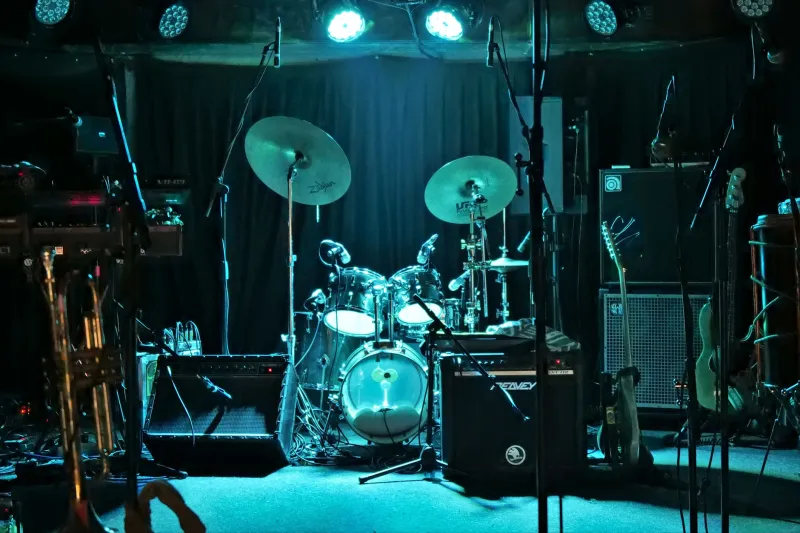
On a wet Tuesday in Leeds, a four-piece are loading in through a fire door with a broken closer. Room three costs £14 an hour, the kettle is on the blink, and there is a laminated sign above the radiator that says no borrowed drum keys. They have a two-hour slot and a list of three ideas. By the time the singer has found a working DI box, they have already cut the intro to the first one.
That is not a rehearsal in the old sense. It is an edit session with amps. Across the UK in 2026, pay-by-the-hour practice rooms — city-centre lock-ups, church halls with partitioned corners, industrial units with a code lock and a CCTV light — are quietly shaping how new bands write. The clock is not just renting the room. It is sitting in the arrangement, tapping its foot.
The Meter Makes the Arrangement
The economics are simple and familiar. A shared room in Manchester might run from £12 to £18 an hour; a London slot can double that; a church hall in Cardiff or a community centre in Glasgow sits somewhere in between. Split four ways, it can feel cheaper than a round. Split across a month of writing, it adds up. Bands book shorter sessions. They arrive with parts learned. They record voice notes on the bus home and send them round before the next booking.
What changes is not just discipline but structure. Songs are arriving shorter by a verse. A chorus has to land inside the first minute. The quiet bit has to earn its place, because a two-minute mood piece can eat a third of the session. 'We used to jam until something happened,' says Ade, guitarist in a Sheffield three-piece. 'Now we jam for twenty minutes, find the good bit, and spend the rest of the booking making sure the good bit still works when we are tired.'
What Gets Cut, What Gets Kept
Hourly rooms are ruthless editors. Intros that once drifted now start with a count-in or a single chord. Second choruses get shortened or stripped. Bridges are kept only if they change the temperature of the room. That can sound clinical, but it often makes bands more themselves: fewer borrowed moves, more decisions. A band that has paid for two hours and spent forty minutes on a snare sound tends to remember the lesson.
Sam, who runs a three-room rehearsal block in Manchester, has watched the shift. 'People come in with a plan now,' he says. 'Not always a good plan. But they know what they are trying to finish. We get fewer six-hour Sunday jams and more two-hour hit-and-runs. The rooms are busier because the sessions are tighter.'
The risk is that everything gets trimmed to fit. A song that needs ten minutes to unfold can sound rushed when the meter is running, and some of the best UK bands are the ones who ignore the clock until the last twenty minutes. The point is not that short is always better. It is that the room makes the choice visible. If a part survives an hourly booking, it has usually survived a small test of nerve.
Lock-Ups, Church Halls and the Geography of Practice
The spaces themselves leave marks. A basement lock-up with low ceilings encourages a certain kind of drum sound and a certain kind of argument. A church hall with high windows and hard walls makes harmonies feel bigger than they are. A converted industrial unit on the edge of Bristol or Birmingham gives a band room to spread out and a reason to car-share. None of this is new, but in 2026 the hourly model has spread beyond the old city-centre rehearsal blocks. Community halls, arts centres and even quiet pubs are renting out back rooms by the hour, often to bands who could not afford a full lock-up.
That has changed who gets to practise. A group of teenagers can book a Saturday afternoon without committing to a month of rent. A solo artist can test a new band for one session. A drummer can hire a room with a kit already set up rather than borrowing a van and a friend's garage. The result is a wider, more temporary scene — less romantic than a permanent lock-up, but more porous.
The Noticeboard Scene
Walk into any of these rooms and you will find the same infrastructure: a noticeboard by the toilet, a stack of old flyers, a bass cab with a missing wheel, a handwritten sign advertising a guitarist who likes Fontaines D.C. and can do Thursdays. Rehearsal rooms have always been social spaces, but the hourly model makes them more like hubs. Bands overlap in the corridor. They hear each other through the walls. They borrow leads and recommend producers.
Priya, who manages a two-room space in Bristol, says the calendar has become a quiet matchmaking service. 'We see the same names book before and after each other,' she says. 'Sometimes they end up sharing a bill. Sometimes they end up sharing a member. It is not a venue, but it does the same job in the afternoon.'
When the Clock Isn’t the Enemy
The best hourly sessions do not treat the timer as a producer. They treat it as an editor with no manners — one that will tell you when a song is hiding behind a long intro or a too-comfortable groove. UK bands in 2026 are learning to write for the room they can afford, then rewrite for the room they want to fill. The clock is not the co-writer. It is the thing that makes you finish the sentence.