Before the Pressing Plant: The UK Listening Room Circuit Rewriting Release Night
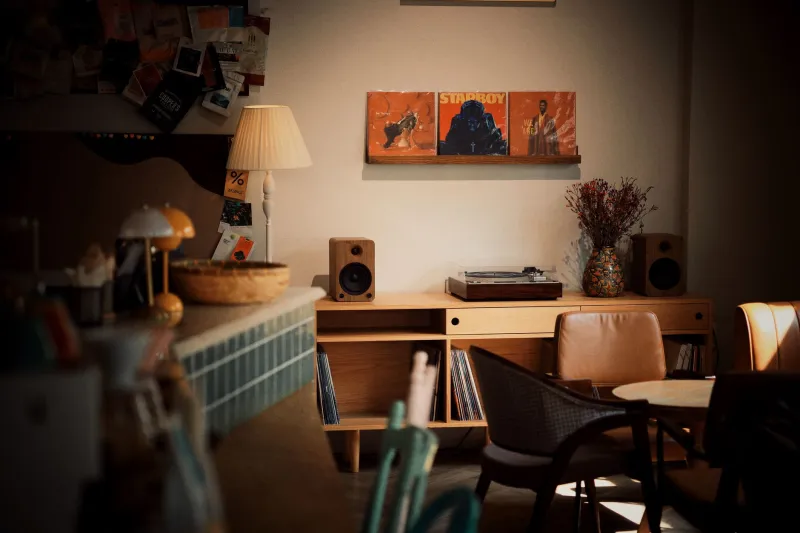
On a Thursday in Leeds, the night starts with a laptop and a borrowed projector. There is no stage, no support act, no bar staff rushing a last call. Thirty people sit on mismatched chairs in the back room of a record shop while an artist plays six unfinished tracks through a system that costs more than the shop's entire vinyl stock. This is a listening session, and in 2026 it is becoming one of the most useful nights in the UK's independent music calendar.
The room is the release strategy
The phrase covers a lot of ground. It can mean a producer previewing a record on a proper soundsystem, a band playing a finished album front to back with no crowd noise, or a small promoter turning a bar's back room into a temporary cinema for music videos and demos. What ties these nights together is simple: the music gets the attention, not the merch table, not the lighting rig, not the support slot. The headphones come off, the lights go low, and everyone in the room is there to listen.
That might sound precious. In practice, it is practical. A full gig costs money before anyone has played a note: PA hire, door staff, flyers, rehearsal time, transport. A listening session can run on a decent speaker setup, a laptop, a couple of posters and a room that already has chairs. For artists at the point where a release is finished but the live show is not, that lower barrier matters.
Why artists are treating rooms like test presses
The most interesting sessions are not launch parties. They are feedback loops. An artist books a small room, invites twenty or thirty people, plays a rough sequence and watches what happens. Which track gets a reaction? Where do people drift? Does the single sound thin next to the opener? It is not a focus group, and it should not feel like one, but it is information you cannot get from streaming stats.
In Bristol, a producer might use a Stokes Croft bar's soundsystem to check low-end on a track that sounds fine in the car but muddy on a club rig. In Glasgow, a band might play a finished record in a community space and realise the acoustic ballad that closes side A needs to be the opener. In Peckham, a label might run a Sunday afternoon session where the room hears a release before the press release goes out. None of these are gigs. All of them are release nights.
The promoter maths: low overheads, high attention
Small promoters have noticed. A listening session is easier to sell than a mystery bill on a Tuesday. It gives people a reason to leave the house that is not simply 'come and see a band you have not heard of'. The promise is specific: hear this record, in this room, before it lands. That is a modest promise, but it is honest, and in a crowded calendar honesty travels.
There is also a social function. These nights are often shorter than gigs, cheaper to put on and easier to leave than a club. They suit people who want to be part of a scene without standing at the back of a venue for four hours. The bar sells a few more drinks. The record shop sells a few more records. The artist gets a room full of people who have actually listened. Everybody wins, or at least nobody loses too badly.
The physical table without the merch desk
One of the quieter shifts is what happens after the playback. Instead of a merch desk by the door, there is often a table with test pressings, cassettes, zines or a QR code to a Bandcamp page. The difference is the context. People have just heard the record in a room designed for listening. They are not buying a souvenir between support acts. They are buying the thing they just experienced.
That does not mean every session sells out its pressing. It means physical copies get a fair hearing. A vinyl record is expensive to make and expensive to buy. A listening session gives it a story before it becomes a product. It also gives the artist a chance to explain the artwork, the sequencing, the one track that nearly got cut. That kind of detail does not fit in an Instagram caption, but it fits in a room with thirty people and a decent set of speakers.
Where the circuit is taking shape
The geography is familiar from the rest of the UK's independent scene. Leeds, Manchester, Bristol, Glasgow, Cardiff, London. But the interesting sessions are often in the smaller rooms: the record shop back room, the community centre with the good piano, the bar that closes early and does not mind a crowd sitting down. These spaces are not trying to be venues. That is the point. They already have a local audience and a reason to exist.
What is changing in 2026 is the expectation. A listening session no longer feels like a compromise or a warm-up for the real thing. It is becoming its own format, with its own etiquette: keep talking to a minimum, put your phone away, stay for the last track. That etiquette is being taught by promoters and learned by rooms. It is a small thing, but it is how scenes develop habits.
What to watch next
The risk is obvious. If every release gets a listening session, the format becomes a box-ticking exercise, and the room fills with people waiting for the bar to open. The best nights will stay small, specific and tied to a place. They will be run by people who know the artist, the shop and the regulars. They will not try to be a gig. They will just turn the lights down, put the record on and trust the room to listen.
For fans, that means keeping an eye on the noticeboards and newsletters that do not always make it to the usual listings. For artists, it means there is now a release night that does not require a full band, a backline or a van. For the UK's smaller scenes, it means one more reason to gather in a room and pay attention. That is not a small thing. It might be the most useful night of the week.