Twenty-Five Minutes to Change the Room: The Quiet Power of the UK Support Set
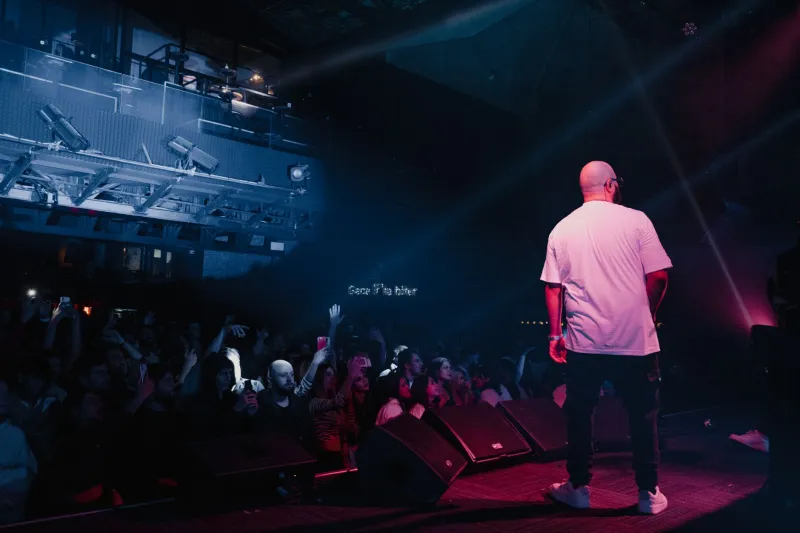
There is a moment, about 15 minutes into a support set, when the room decides. The bar queue is still long. The lighting is still functional rather than flattering. Half the audience is looking at their phones, and the other half is looking at the door. Then a song lands, the front few rows turn towards the stage and the room quietly changes its mind. That moment is the whole argument for the support slot.
In 2026, the UK touring circuit is leaning harder on that moment. Headline tours are expensive to run, ticket prices are under pressure and audiences are more selective about what they leave the house for. Support acts are not a new idea, obviously. But the role they play is shifting. They are becoming a discovery layer, a proving ground and, for promoters and labels, a low-cost way to test whether an artist can hold a room before anyone commits to a bigger bet.
The booking maths
Support slots are rarely booked by accident. A promoter might pair a headliner with a local opener to shift a few extra tickets in a specific city. A booking agent might use an opening slot to introduce a new signing to a audience that already trusts the headliner's taste. A label might see it as a cheaper alternative to a headline show that nobody is ready to underwrite yet.
The result is a strange but useful mixture. Some support slots are favours. Some are friendships. Some are calculated pieces of audience development. The best ones are all three at once. The worst ones are an afterthought: a name added to the poster because the bill looked thin. Audiences can tell the difference, even if they cannot explain it.
What a great 25 minutes does
A support set has a different job from a headline set. It cannot rely on devotion. It cannot assume patience. It has 25 minutes to explain what it is, why it matters and why anyone should remember it on the bus home. That is not a support act's burden; it is a support act's advantage. There is no time for the mid-set lull, the self-indulgent jam or the long story about the van breaking down.
The great ones tend to do three things. First, they start with the song most likely to stop a conversation. Second, they keep the between-song talk short and human. Third, they leave one obvious calling card: a hook, a line, a riff or a feeling that survives the walk to the bar. The lighting might be flat and the monitor mix might be rough, but the shape of the set can still be deliberate.
The economics and etiquette
Support touring is not a loophole. It is work. There is fuel, parking, food, sometimes a hotel and often a loss. Fees vary wildly, from a token amount to a modest guarantee, and many support acts are effectively paying for the privilege of being in the room. That is not a scandal in itself, but it is a reality that shapes who gets to say yes.
The etiquette matters too. Turn up on time. Be nice to the venue staff. Do not overrun. Do not treat the sound engineer like an obstacle. Do not sell merch in the headliner's eyeline without asking. These are small things, but they determine whether the slot becomes a relationship or a one-off. In a circuit built on favours and reputation, the small things are the economy.
A discovery engine with a door policy
The optimistic case for the support slot is that it lowers the barrier between an artist and a new listener. You are already in the room. You have already paid. You are already in the mood to be convinced. That is a rare combination. A support set can turn a passive audience into a curious one, and a curious audience into a fanbase.
The less optimistic case is that the support slot can become a closed loop. If the same few artists keep getting the same few openings, the discovery engine starts to idle. Promoters have a role here. So do headliners. A bill that takes a small risk on a local act, a genre-adjacent oddity or an artist with no obvious industry heat is not just a nice gesture. It is good programming.
First name on the bill
None of this means the support act is the new headliner. That framing is too neat. The headliner still sells the tickets, carries the production and takes the financial risk. But the first name on the bill deserves more attention than it often gets. It is where the room is tested, where the tour is humanised and where the next headline act is usually hiding in plain sight.
So next time you are standing near the back with a drink, waiting for the main event, give the opener 25 minutes of actual attention. You might see a band on their way up. You might see a great set in a room that is half full. You might see the exact moment the room changes its mind. That is not a warm-up. That is the point.