Sixteen Bars, One Shot: Why the UK Guest Verse Is Now an Audition
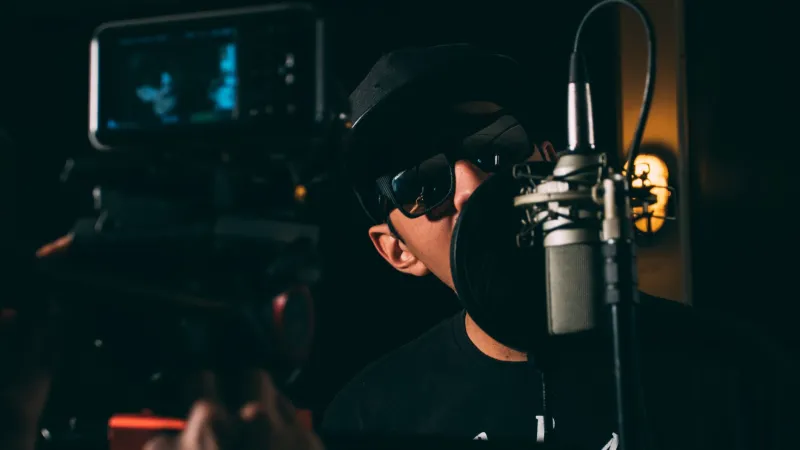
There was a time when a UK guest verse was basically a text message. Someone you knew from the scene had a tune with a gap in it, you drove to a studio, you did your sixteen, you took a photo, and that was that. The favour was the point. Nobody expected it to do much beyond reminding people you existed.
That's changed. In 2026 the feature has become one of the most tactical moves in the UK release cycle — a compressed, relatively cheap audition that can push an artist further in three minutes than a whole campaign managed a decade ago. And listeners have started to notice the difference between a verse that's there to help a mate and a verse that's there to change a trajectory.
The favour economy is over
Blame the maths. A full project costs money, time and attention, and attention is the scarcest of the three. A guest slot costs a train fare and an afternoon. It lands on someone else's audience, someone else's rollout, someone else's playlist placement. If it works, you've borrowed a room you couldn't have booked yourself.
The result is that the feature has shifted from social currency to career strategy. Artists are picking spots the way a band picks a support tour: not for the money, not for the laughs, but for the specific room it puts them in front of. That's not cynicism. It's just what happens when the release calendar gets this crowded.
What a feature is actually for
Strip it back and a guest verse does one of four jobs. It proves range — a vocalist who can hold their own on a drill beat, a rapper who can ride something looser. It transfers credibility — a name your audience trusts vouching for a name they don't know yet. It seeds a collaboration the scene will be talking about by the summer. Or it simply puts a great verse in the world and lets the internet do the rest.
The best ones do two at once without sounding like they're doing either. The worst ones sound exactly like what they are: someone doing a favour in a studio they've never been to before, over a beat they didn't choose, with a verse they wrote on the train.
Four scenes, four job descriptions
Grime and drill have always understood the guest verse as a baton pass. The entire architecture of the scene is built on crews, diss tracks and call-and-response, so a feature carries weight beyond the song. Get it right and you're in the conversation. Get it wrong and it's a screenshot people keep for later.
Indie and guitar music came to it later, and it shows in a good way. The crossover feature — a rapper over a post-punk bassline, a folk singer dropped into a shoegaze mix — is still novel enough to make a song travel. It's a lower-percentage shot than a straight swap within a genre, but the upside is bigger when it lands.
Pop is the odd one out. Here the guest verse is closer to casting. It has to fit a very specific gap in the arrangement, it has to survive a radio edit, and it has to not derail the chorus. It's the most technically demanding version of the job and the least forgiving.
How to hear a standout verse
There are tells. The first one is the entry. A great feature announces itself in the first bar and a half — a switch in cadence, a change in the texture of the mix, a new pocket in the drums. If you find yourself waiting for the verse to start, it already hasn't.
The second is the exit. Listen to how the artist hands the track back. The best features end on a line that makes you want to hear the whole song again, rather than a line that makes you want to hear their mixtape instead. That balance is harder than it sounds, and it's where the audition framing gets real.
The third is restraint. Anyone can do sixteen bars at full volume. The verses that stick are usually the ones that leave something in the tank — the half-second pause, the ad-lib held back, the flow that doesn't quite resolve. You can hear the artist thinking about the song rather than about their own highlight reel.
The new release cycle runs on borrowed minutes
The wider effect is structural. Where a rollout used to be single, remix, video, album, the 2026 pattern is more like a chain of cameos — an artist appears three or four times across a season on other people's records, builds a picture of who they are in fragments, and only then drops their own project with an audience already primed.
It's a smarter way to build momentum, and a riskier one. Do too many and you become the guest, not the artist. Do too few and nobody remembers the name by the time your own single lands.
So next time a track drops with a feature on it, don't skip straight to the chorus. There's a person in that verse trying to make a case in less than a minute. Some of them are doing a favour. The good ones are applying for something bigger.