Your Ends, Your Ears: The Postcode Playlist as a UK Scene Guide
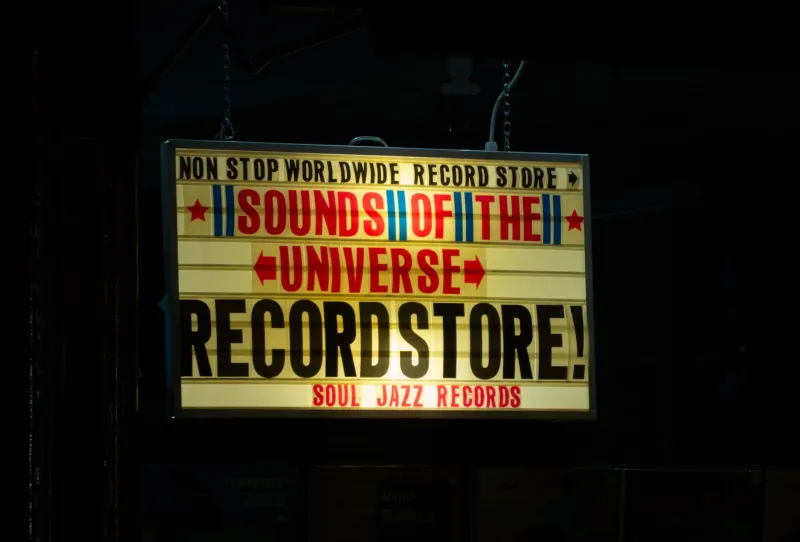
There is a point where a playlist stops being background noise and starts acting like a map. Not a map of the UK in the usual broad strokes — London, Manchester, Glasgow, Bristol — but something tighter. A few streets. A bus route. A shop counter. A postcode.
Over the past year, more UK artists have been building listening guides around specific neighbourhoods rather than vague regional identities. Call it the postcode playlist: a short, curated set of tracks tied to a place, often made with an independent record shop, a café, a community radio station or a local promoter. Sometimes it is a streaming link. Sometimes it is a CDR left by the till. Sometimes it is a four-track EP with a launch night in the back of a barbershop.
The idea is simple enough. The execution is where it gets interesting.
From Borough to Booth: How These Things Get Built
A postcode playlist usually starts with a conversation rather than a spreadsheet. An artist or small label asks a local shop if they can put together a monthly selection. The shop gets something to play on a Saturday afternoon. The artists get a reason to be in the room together. A community station might host a one-hour special. A café might stick a QR code on the receipt.
The best versions feel like a scene guide rather than a marketing campaign. You might get an SE15 list that runs from a raw garage vocalist to a jazz-adjacent producer who plays the same pub back room. An LS6 selection might stitch together a student radio DJ, a DIY punk trio and a grime MC who has been doing open mics since sixth form. A CF10 playlist can move from Welsh-language indie to drum & bass without needing a thinkpiece to explain the link.
That local grounding matters. UK music discovery has always run through people — the person behind the counter, the mate with the aux cable, the late-night presenter who plays what they want. The postcode playlist is a way of formalising that without making it feel like a brand activation.
A Discovery Tool With a Short Leash
For listeners, the appeal is obvious. You trust the shop. You trust the station. You press play and get a slice of what a place actually sounds like on a Friday night, rather than what an algorithm thinks you might tolerate after a workout playlist.
But there is a short leash on the format. A postcode is not a genre. A neighbourhood is not a personality. The moment a playlist starts acting like a border checkpoint, it stops being useful. Scenes leak. Artists move. People collaborate across boroughs and council lines and train zones. A good postcode playlist is a doorway, not a gated community.
That is also where curation gets tricky. If the same five artists appear on every local list, the guide becomes a clique. If a shop only stocks what it sells, the selection narrows to what already has a customer base. The strongest versions make room for the awkward stuff — the demo recorded on a phone, the spoken-word track, the artist who has played exactly two gigs and one of them was in a library.
The DIY Marketing Route
For artists, the postcode playlist is a low-cost route to attention that does not rely on pitching a faceless curator or hoping a sync licence falls out of the sky. It is a reason to collaborate with a local business that already has a relationship with the area. It gives a release a physical home: a stack of CDs by the till, a launch event, a radio interview, a poster in the window.
It also creates a useful paper trail. A postcode EP with four artists from the same area can be stocked by one shop, played by one station and covered by one local newsletter. That is not a national campaign. It is a local circuit. For a lot of UK artists in 2026, that circuit is more valuable than a playlist add that vanishes after a week.
The catch is reciprocity. Shops and stations are not free billboards. The artists who get the most out of postcode-level curation tend to be the ones who show up — play the in-store, do the interview, bring the mates, buy something from the shop. The format works when it is a relationship, not a transaction.
Beyond the Regional Label
Broad regional labels still have their place. They help people find things. They give scenes a name. But they can also flatten a lot of detail. A postcode playlist is a corrective to that. It documents the specific: the street, the venue, the community station, the record shop that has been quietly stocking local releases for a decade.
That makes it a useful archive too. In five years, a playlist tied to a particular set of streets will tell you something about what was happening there — who was playing, who was recording, who was running the night. It is a time capsule with a tracklist.
It is not a replacement for broader scene coverage, and it should not be treated as one. It is a layer. A pin on the map. A way of listening closer to home.
What to Listen For
Start with the source. Who made the playlist, and why? Does it include artists who actually live or work in the area, or is it postcode-washing — a local aesthetic wrapped around a national campaign? Does it link out to the shop, the station, the night? Does it make you want to go somewhere and hear something in person?
The postcode playlist is not the whole map. It is a set of directions. Used well, it can take you from a screen to a room, from a generic recommendation to a name you will remember. That is a decent place for UK listening to start: your ends, your ears, and a short walk to the shop.