Left on the Counter: The UK's Quiet Physical Release Hunt

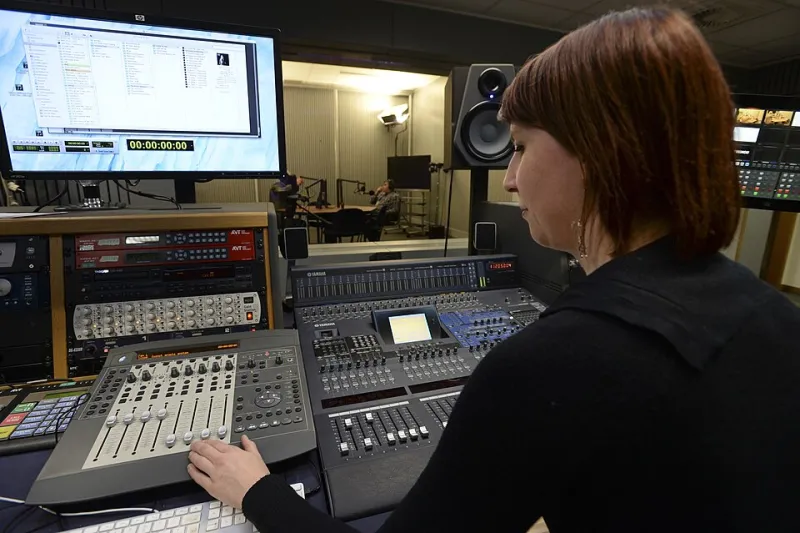
Photo: Andikan Efiok Eduok, CC0, via Wikimedia Commons
There is a barber on the edge of Leeds city centre with a stack of CD-Rs next to the till. They have been there since the first week of November. Nobody paid for them, nobody is really promoting them, and the barber in question — a bearded man named Ade who mostly wants to talk about football — will hand you one if you ask nicely, or if you look at them for longer than three seconds.
The disc belongs to a four-piece from Wakefield with about nine hundred monthly listeners and a stubborn belief that the internet is not the only place a record can exist. They are not alone. Across the UK, a small but very visible habit has taken hold: instead of (or as well as) the standard streaming drop, artists are leaving physical artefacts in the wild. A tape tucked into the poetry shelf at a Bristol bookshop. A postcard with a download code pinned to the noticeboard of a Sheffield coffee roastery. A QR sticker on the underside of a table in a Salford bar, which, if you scan it, gives you three tracks and a handwritten note.
The drop, not the launch
What separates this from a normal release is the absence of a moment. There is no midnight, no countdown graphic, no press release landing in an inbox at 9am. The record simply appears, in a place, at some point in the afternoon, and then it either gets found or it does not.
'We did the usual thing for the last EP and it felt like shouting into a room where everyone was already shouting,' says Marnie, who sings and plays guitar in the Wakefield band. 'This time we wanted to make the record a thing you could hold before you had any opinion about it. You find a CD in a barber shop, you're already curious. The curiosity is built in.'
That is the whole pitch, really. Streaming has flattened the entry point to a tap. A disc behind a till is friction, and friction — in the right dose — is memorable.
How a location gets picked
The selection process is less mysterious than it sounds. Artists tend to pick places they already go to, run by people who will not bin the stuff within a week. The logic is proximity plus permission-adjacent trust: the café where you know the owner's name, the bookshop that stocks the local poetry press, the barber who has been cutting your hair since college.
Some artists are more systematic. One Glasgow duo mapped out twenty venues by foot, dropped a cassette in each and photographed the drop for a low-key social post that went out two days later. Another act in Cardiff built a simple map on their website — no addresses, just rough areas and a riddle per location — so the hunt itself became content.
The staff who never signed up to be A&R
The gatekeepers, in almost every case, are people who did not ask for the job. Baristas, booksellers, barbers and one very patient woman who runs a laundry in Belfast.
'Someone came in with a shoebox and asked if they could leave a few,' says Priya, who manages an independent bookshop in Stokes Croft. 'I said yes because they were polite and the artwork was nice. Now I have a drawer of them and I sort of curate it. If something's rubbish, it quietly goes in the recycling.'
That curation is the interesting bit. These accidental gatekeepers develop taste fast. They notice which drops get picked up and which sit there for six weeks gathering a fine layer of dust. Several told us they now text the artist when stock runs out — an informal restock request that no one planned for.
Why a scavenger hunt beats a playlist
Playlist fatigue is real and well documented: the average listener skips faster than ever, and a track's fate is decided in under ten seconds. A physical drop cannot be skipped in the same way. It asks for a small, deliberate act — walking to a place, asking a question, carrying something home.
That act filters for people who are genuinely curious, and those people tend to become the ones who tell other people. The conversion rate is low in absolute numbers and unusually high in engagement. A hundred discs might produce fourteen actual listeners, but those fourteen will message you, come to a gig, buy a shirt.
What it costs, what it returns
A short run of CD-Rs with printed sleeves can be done for well under a hundred pounds. Tapes cost more; QR cards cost almost nothing but feel disposable, which is why most artists pair them with something physical — a sticker, a folded lyric sheet, a bit of card with a hand-drawn map.
The return is not financial. It is a slower, warmer version of a mailing list, built out of people who found you in a barber shop and therefore have a story about it. In a year where the front door to a release is a feed that refreshes every four seconds, that is worth something.
If you are thinking of doing one: pick five places you actually like, ask first, label clearly, and check back in a fortnight. And be nice to Ade. He is holding your record for you.